

Good custom shelving and built-ins are anchored to the framing, fitted to your actual walls (which are almost never perfectly square) and finished to look like part of the house. That's what separates them from a shelving unit pushed into a closet. Price comes down to three things: how much material the job needs, how the shelves are supported, and the finish. Painted plywood shelving, like the closet job below, is the most budget-friendly option. Stained wood, decorative trim and cabinet-style built-ins cost more.
A real job: custom closet shelving in Clairemont
A homeowner in Clairemont was storing towels, linens and household supplies on a freestanding shelving unit inside a deep closet. Much of the closet's space went unused, and everything was hard to get to. They wanted fixed, painted shelves in two closets that used the full width and depth of each space.
Here's what we built:
8–10 fixed shelves across two closets, cut from 3/4" paint-grade plywood
Shelves roughly 20–24" deep and up to 36" wide, sized to each closet
Iron-on edge banding on every exposed front edge, sanded smooth
Shelves fully painted white before they went into the house
Wall cleats on three sides (left, right and back), with extra vertical supports where a span needed them to prevent sagging
Fastened into studs wherever framing was available, with proper anchors where it wasn't
Two shelves custom-cut to fit around a pipe in the closet
Caulking, filling, touch-up paint and cleanup
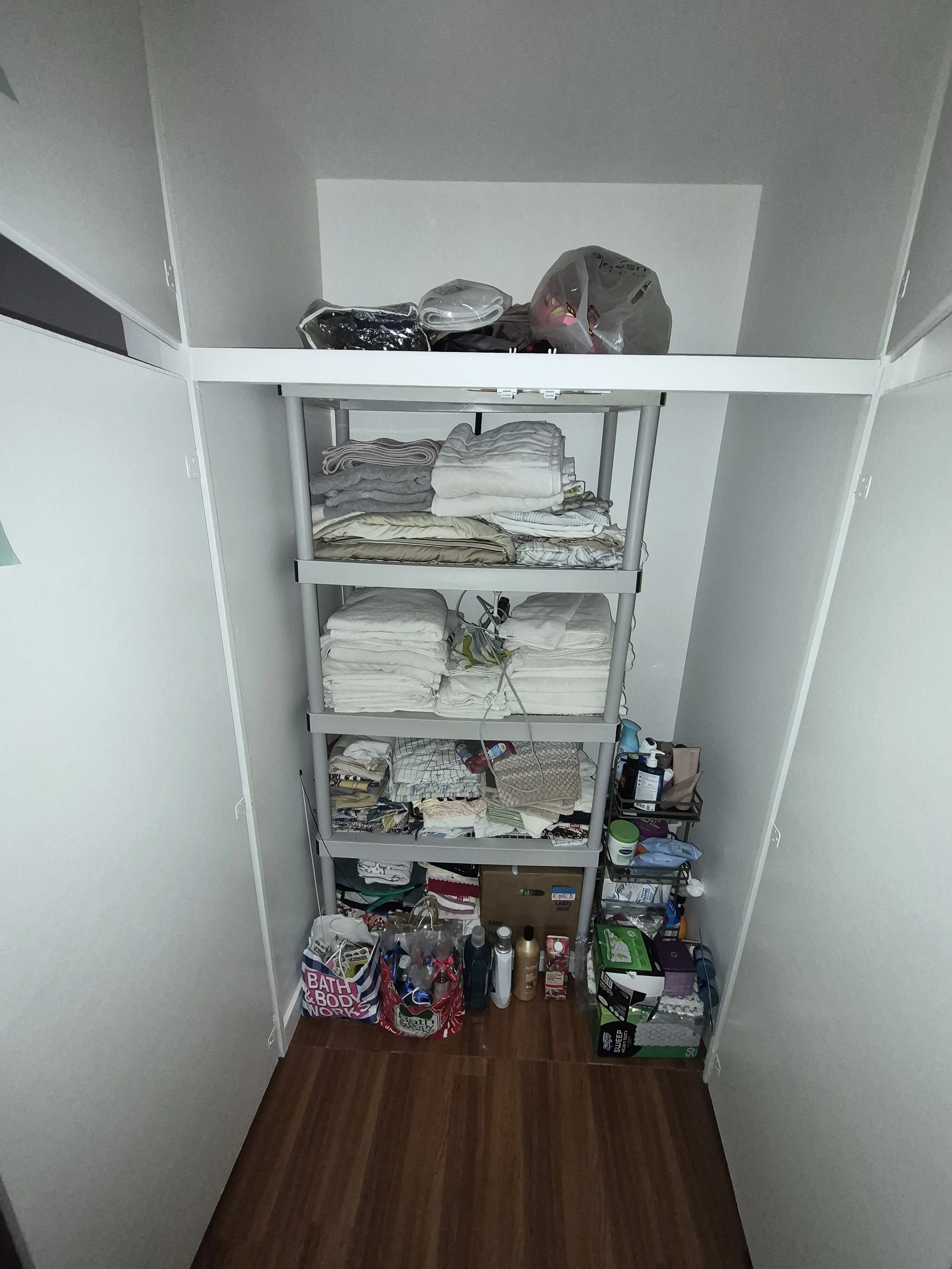
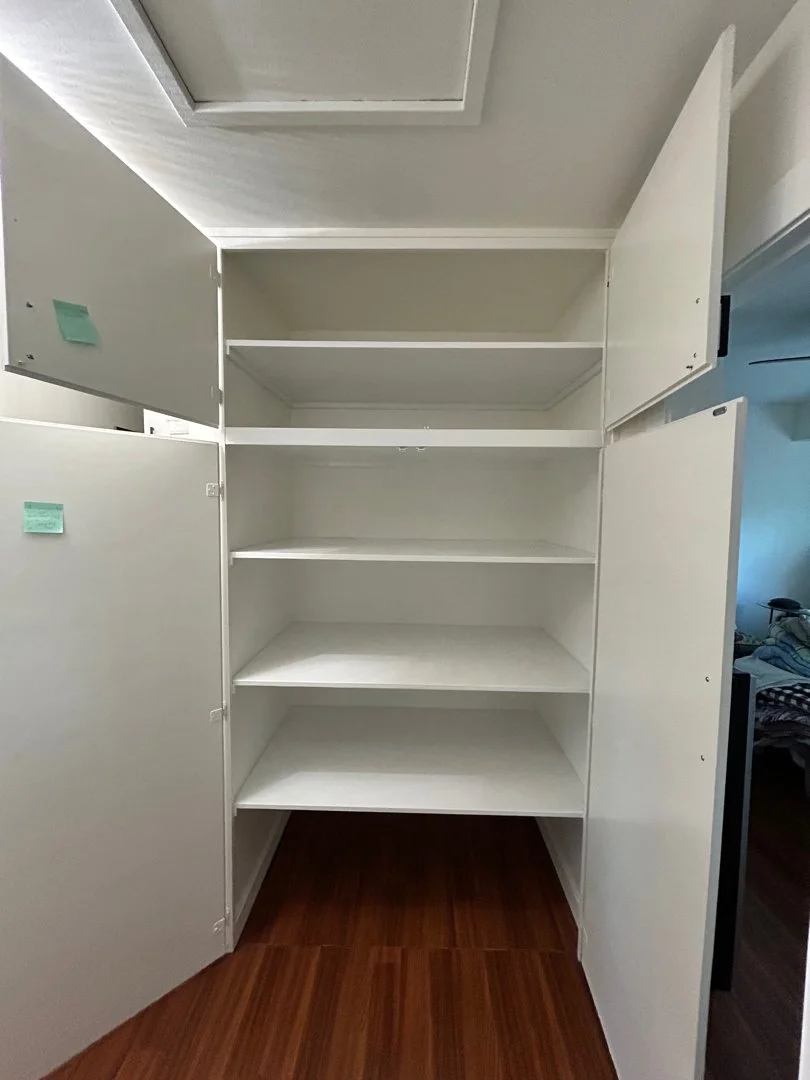
How much does custom shelving cost in San Diego?
This project came to $3,270 for two closets: $2,430 for fabrication and installation, plus $840 in additional plywood. That works out to roughly $325–$410 per shelf, fully built, painted and installed. Your price will depend on shelf size, how many shelves you need, the finish and the conditions in your space.
What made this job cost what it did
The shelves were deep. At 20–24" deep, we could only get about two shelves out of each sheet of plywood. That's far more plywood than a typical 12" shelf job, which is why we added $840 in material once the final cut list was set.
No painting inside the home. The homeowner didn't want painting done indoors. The usual approach is to install the shelves and paint them in place. Instead, we finished every shelf completely before bringing it in, then installed it and did only small touch-ups at the walls. Painting off-site means extra coats, drying time between coats and careful handling so the finish doesn't get scratched on the way in. All of that adds time.
Every shelf was made for that closet. Closet walls are rarely square or plumb, so each shelf was measured, cut and fitted on its own.
Support is most of the job. Deep, wide shelves holding stacks of linens carry real weight. Cleats on three sides, fastening into studs and added supports keep them flat for years.
A pipe in the way. Two shelves had to be cut to fit around a pipe running through the closet.
What makes shelving and built-ins cost more?
The biggest factor is paint vs. stain.
Painted shelving can use paint-grade plywood or MDF. Paint hides seams, filled nail holes and grain differences, and joints can be caulked. This is the most cost-effective way to get custom shelving.
Stained shelving shows everything. It needs higher-grade plywood with a matched veneer or solid hardwood, and solid wood edging in place of edge banding. Joints have to be tighter because they can't be caulked, and the wood needs more sanding plus stain and clear coats. Species matters too: oak, walnut and other hardwoods cost more than paint-grade material.
Other things that raise the price:
Deep shelves: they use more plywood per shelf, as this job shows
Where the painting happens: painting off-site and bringing finished shelves in takes longer than painting in place
Design details: face frames, crown molding, baseboard tie-ins or decorative trim that match the room
Cabinet-style built-ins: doors, drawers and hardware turn shelving into cabinetry
Adjustable shelving: shelf-pin systems in place of fixed cleats
Lighting or outlets: these need to be planned before anything is built
Awkward conditions: pipes, out-of-square walls or long spans that need extra support
If budget is the priority, painted plywood shelving at a standard depth gets you the most storage for the money. If you want a furniture-quality built-in, plan for stain-grade materials and more finish work.
4 things to decide before you build
1. What will the shelves hold? Measure your actual items, like folded towels, bins, books or small appliances. Heavy loads like books or tools need closer supports and shorter spans.
2. How deep should they be? Match the depth to what you're storing and how much room you have to reach. Deeper shelves hold more but use more material and cost more.
3. Fixed or adjustable? Fixed shelves on cleats are stronger and look cleaner. Adjustable shelves give you flexibility but cost more and hold less weight per shelf.
4. Paint or stain, and where? Decide the finish before materials are chosen, because it changes what wood we buy. Also tell us if you'd rather not have painting done in your home, since that changes how the job is planned.
For more on making a space actually hold more, see our post on extra shelves vs. actual storage. If you're weighing cabinet options for a kitchen, see RTA vs. Custom Kitchen Cabinets.
Frequently Asked Questions
Built-ins vs. freestanding shelving: what's the difference?
Built-ins are fastened to the walls and framing, fitted to the space and finished to match the house. Freestanding shelving is a separate piece of furniture that can move. Built-ins use space better and hold more weight, while freestanding units are cheaper and portable.
How deep should built-in shelves be?
It depends on what they hold. Bookshelves are usually shallower than linen or storage shelves, and deep closets can take shelves 20" or more. Measure your largest items first and add a little room to spare.
Paint-grade vs. stain-grade: which should I choose?
Choose paint-grade if you want clean white or colored shelves at the best price. Choose stain-grade if you want visible wood grain and a furniture look, and expect a higher cost for materials and finishing.
How long does a custom shelving project take?
It depends on the number of shelves, the finish and where the painting happens. Shelves painted in place go faster. Shelves that are fully finished off-site need extra time for coats and drying before they can be installed.
Can you add lighting or outlets to built-ins?
Often, yes, but plan it before the shelves are built so wiring can be routed and hidden. Any new wiring or outlets should be done by a licensed electrician.
Ready for custom shelving or built-ins?
Huge Home Pros builds custom shelving across San Diego County. See our Custom Shelving and Finish Carpentry pages, or reach out to talk through your space.