
San Diego Homeowners: Why Your Fence Is Leaning After Rain Season
A fence that starts leaning after a rainy season is easy to dismiss at first. Maybe it’s only off by a few inches. Maybe it still opens and closes normally. But in many cases, a leaning fence is a sign that something underneath has changed — and the longer it sits, the more expensive the fix can become.
Not every leaning fence needs to be replaced, but it’s worth understanding why it moved in the first place.
Looks Fine… Until It Doesn’t
Most fences don’t suddenly fall over overnight.
The process usually starts gradually. Heavy rain saturates the soil, causing it to soften and shift. Over time, fence posts can begin moving out of position, especially if they weren’t installed deep enough or if the surrounding soil has poor drainage.
What starts as a slight lean can eventually put stress on gates, panels, and neighboring posts, causing larger sections of the fence to become unstable.
The Real Problem Is Often Underground
Many homeowners focus on the fence itself, but the root cause is usually below ground.
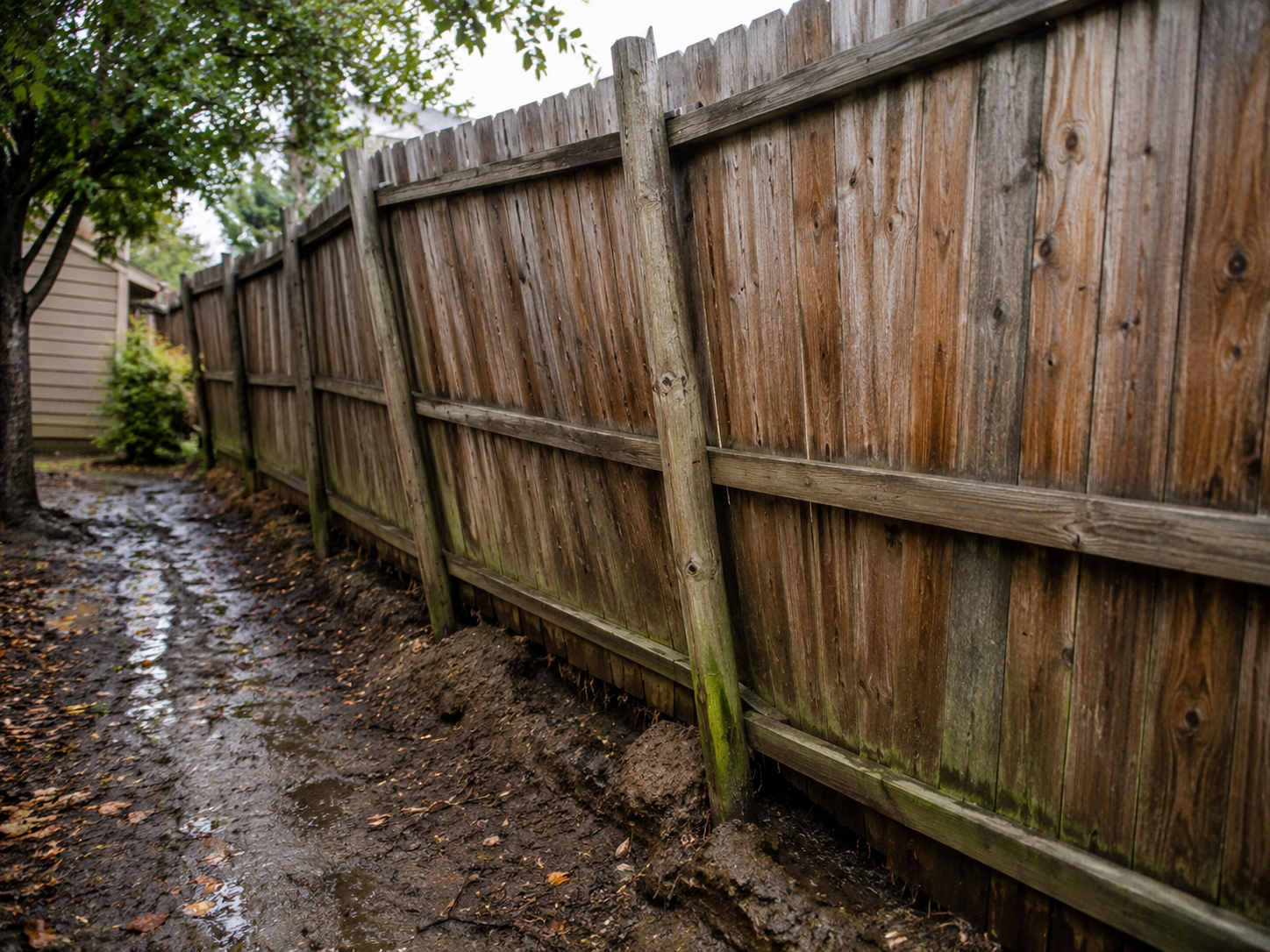
Common issues include:
⚠️ Soil erosion around the post base
⚠️ Water pooling near fence lines
⚠️ Aging or rotted wood posts
⚠️ Concrete footings that have loosened over time
⚠️ Sloped yards where runoff repeatedly washes out support areas
Simply pulling a fence back into position without addressing the underlying cause often leads to the same problem returning.
Small Detail, Big Impact
One thing many people miss is how drainage affects fencing.
If water consistently collects near the fence line, even a well-built fence can begin shifting over the years. Downspouts, grading issues, irrigation leaks, and poor yard drainage can all contribute to movement after heavy rain seasons.
When we inspect leaning fences, we often spend as much time looking at the surrounding conditions as we do the fence itself.
Repair or Replace?
The answer depends on what caused the movement.
In some cases, replacing a few posts and reinforcing the affected section is enough. In others, widespread rot, multiple failed posts, or long-term soil movement may make replacement the more practical option.
The important thing is understanding the condition of the structure before investing money in a temporary fix.
Don’t Ignore the Early Signs
A fence rarely gets straighter on its own.
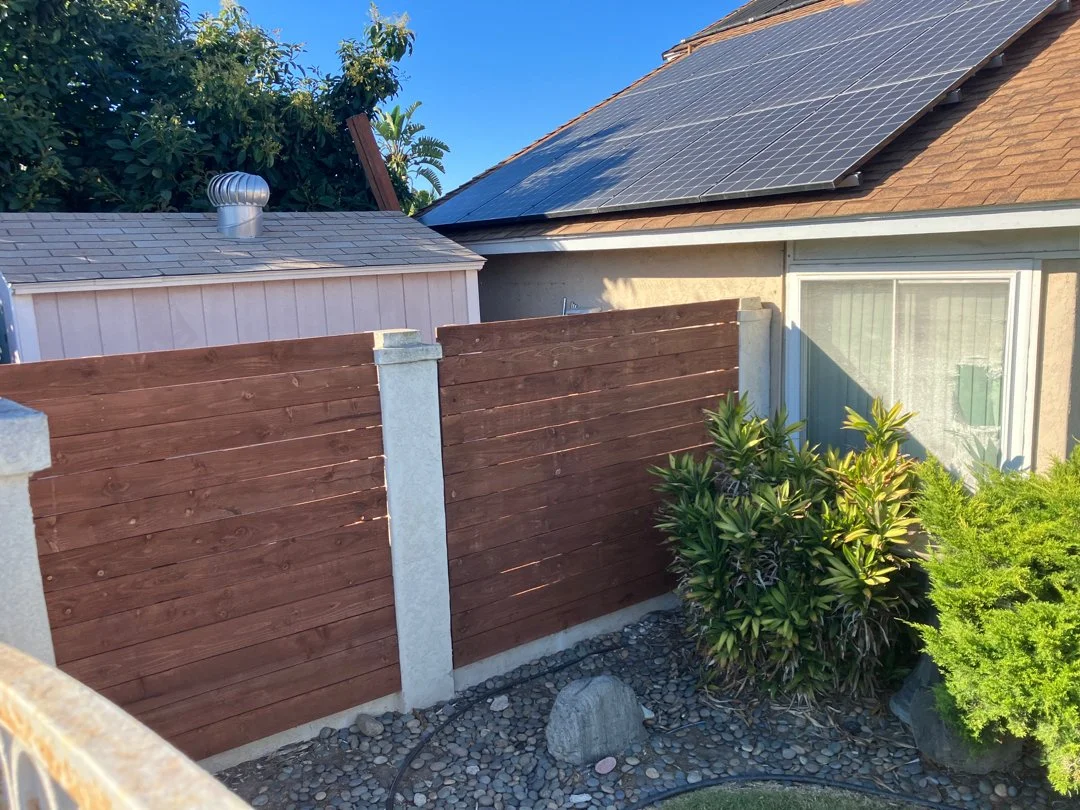
If you’ve noticed leaning sections, gates that no longer line up, widening gaps, or posts that feel loose after the rainy season, it’s worth having a closer look before the problem spreads.
At Huge Home Pros, we help San Diego homeowners identify not only what moved, but why it moved, so repairs address the actual cause rather than just the visible symptom. If you have questions about a fence, drainage issue, or exterior repair concern, we’re always happy to take a look and point you in the right direction.