
Before you mount that TV in your San Diego home
Mounting a TV can seem straightforward: find the right height, drill a few holes, and attach the bracket. But the part you cannot see matters most. Behind the drywall may be wood studs, metal framing, electrical wiring, plumbing, or blocking installed during construction.
Before the first hole is drilled, it is worth understanding what the wall can safely support and what the drill could encounter.
A stud finder is only the starting point
Most TV mounts are designed to fasten securely into wall studs. A stud finder can help locate them, but it does not always tell the whole story. Textured walls, double-layer drywall, metal studs, pipes, and wiring can all produce confusing readings.
A more reliable approach is to scan the area several times, mark both edges of each suspected stud, and confirm the spacing. Outlets and switches can also offer clues because their electrical boxes are often attached to a stud, though that is not guaranteed.
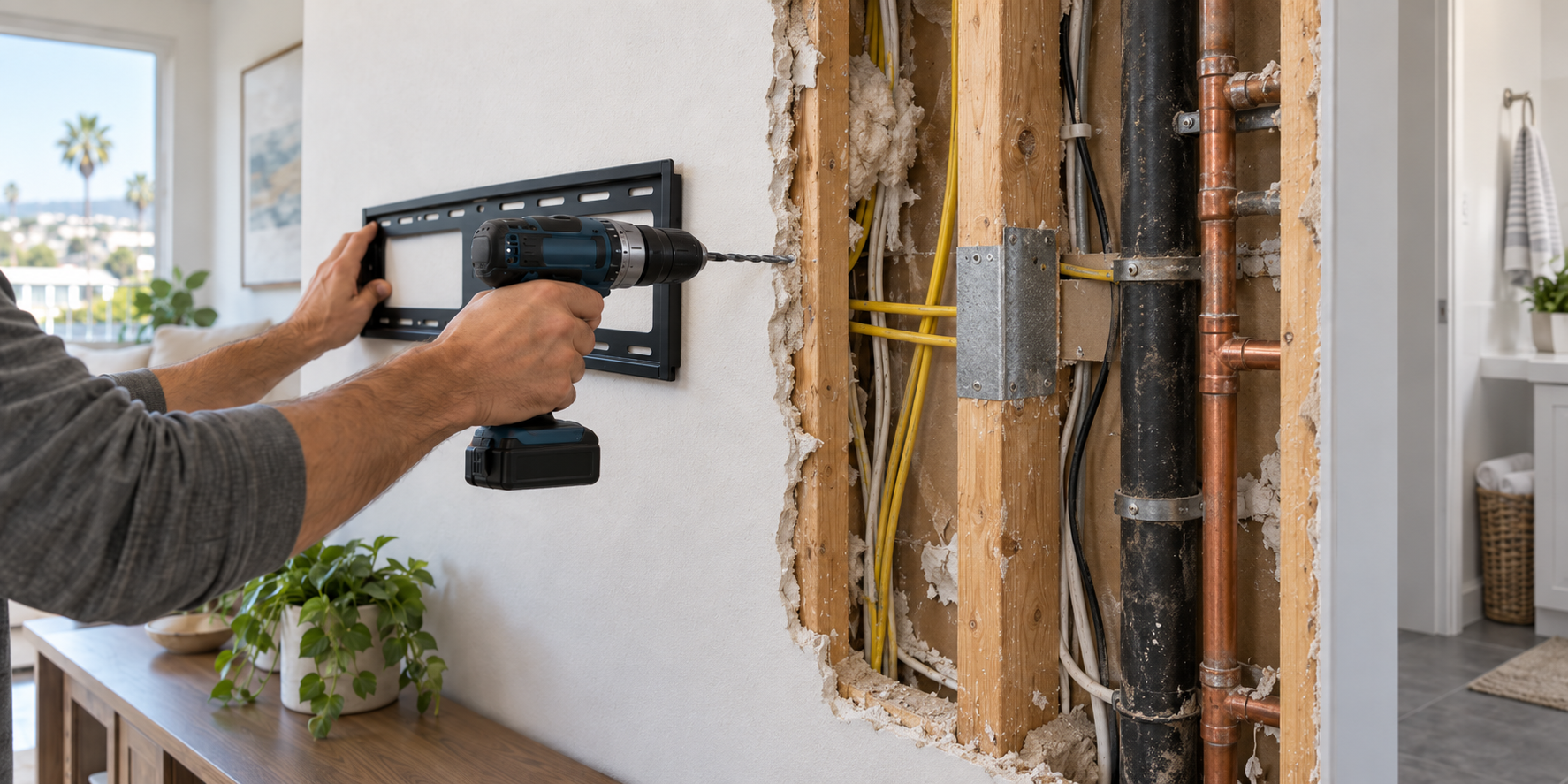
Looks empt
y… until the drill goes in
Electrical cables often run vertically or horizontally from outlets, switches, and wall-mounted fixtures. Plumbing may be present near kitchens, bathrooms, laundry rooms, or walls shared with those spaces.
Protective metal plates are sometimes installed over studs where pipes or wires pass through them. If a drill suddenly meets firm metal, stop. That plate may be there specifically to prevent a screw from reaching something important.
Extra caution is also needed above and below electrical fixtures, near plumbing walls, and around utility areas. A slightly different TV position is usually easier to manage than a damaged wire or punctured water line.
The mounting method depends on the wall
Wood studs generally provide the most straightforward mounting surface. Metal studs require compatible hardware and a mounting method designed to distribute the load correctly. Masonry walls call for the right anchors and drill bit for concrete, brick, or block.
Drywall anchors can be appropriate in certain situations, but not every anchor is suitable for a large television or a full-motion mount. Articulating mounts create additional leverage when the TV is pulled away from the wall, placing more stress on every attachment point.
Small details make the installation feel finished
A secure installation also considers outlet placement, cable routing, viewing height, ventilation, and access to ports. Running a standard TV power cord inside the wall is generally not the same as installing an approved in-wall power solution.
The cleanest result comes from planning the mount, power, and low-voltage cables together before drilling begins.
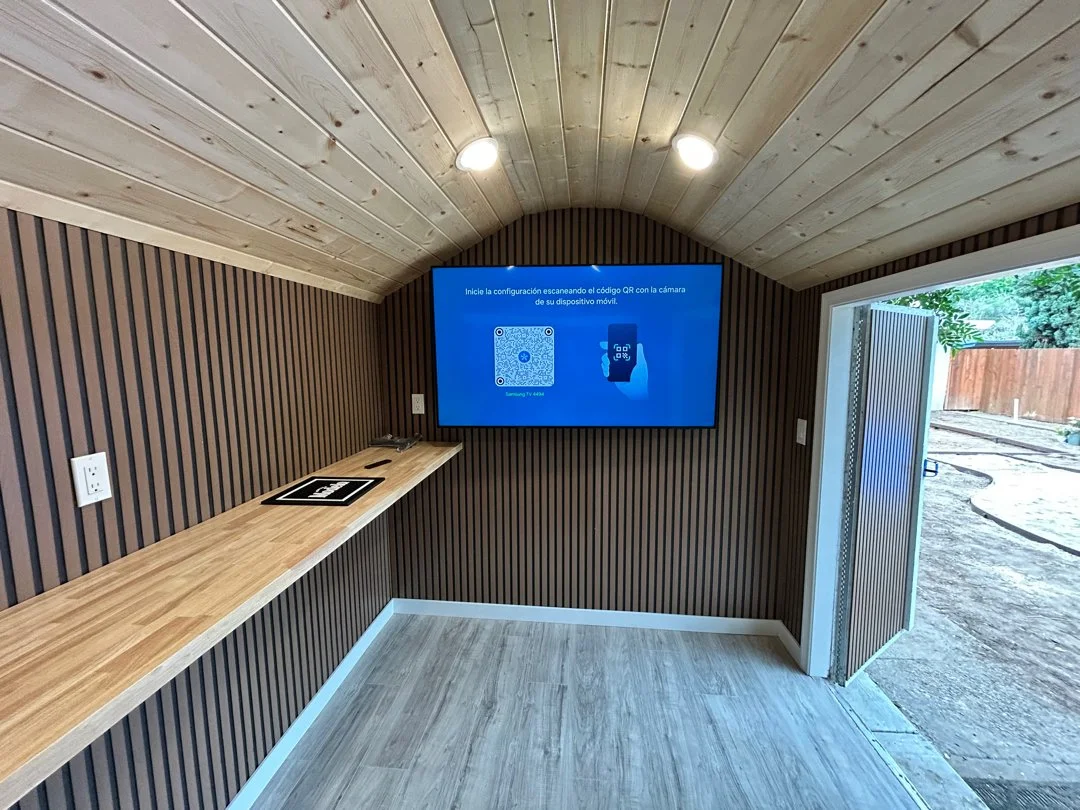
If you are unsure what is inside a wall or which mounting method fits the surface, Huge Home Pros can help assess the area and install the TV with the surrounding wiring, plumbing, and wall construction in mind.