
Hollow-sounding tile in your San Diego home? Here’s what it means
Hollow-sounding tile can be unsettling. You tap one section of the floor and hear a solid “thud,” then another spot sounds noticeably empty. That difference can point to a gap beneath the tile, but it does not automatically mean the tile is about to fail.
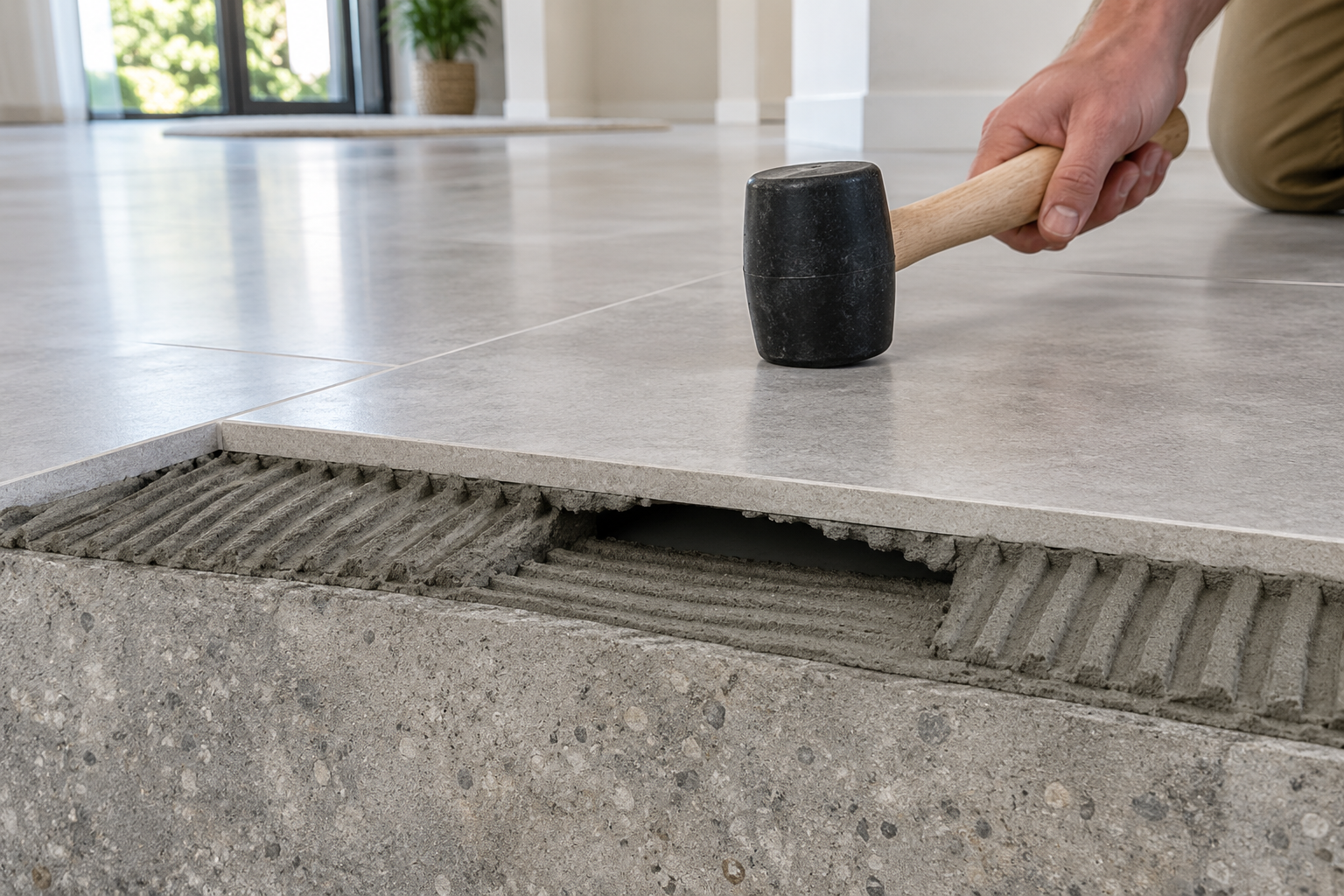
What that hollow sound actually means
Tile sounds hollow when part of it is not fully supported by mortar underneath. This can happen when the mortar was applied unevenly, began drying before the tile was set, or did not make enough contact with the back of the tile.
Large-format tiles are especially sensitive to installation technique because their wider surface makes consistent mortar coverage more important.
Looks fine… but is it a problem?
A hollow sound alone is not always an urgent issue. Some tiles remain intact for years, particularly in areas with little foot traffic and no heavy loads.
The concern grows when the sound appears alongside other warning signs. Movement underfoot, cracked grout, loose edges, recurring grout repairs, or a tile that rocks when stepped on can indicate that the bond is weakening. A hollow tile in a busy walkway or beneath heavy furniture is also more likely to become damaged.
Where this starts to go wrong
Unsupported areas leave tile with less ability to handle pressure and impact. A dropped object, concentrated furniture leg, or repeated foot traffic can crack a tile that would otherwise be well supported.
In bathrooms, showers, and other wet areas, the bigger question is whether movement has affected the grout or surrounding waterproofing. A hollow sound does not prove there is a leak, but cracks and loose tile can create pathways for moisture and deserve a closer look.
One tile or a larger pattern?
A single hollow spot may be an isolated installation issue. Multiple hollow tiles across the same floor can suggest inconsistent mortar coverage, poor surface preparation, or an installation method that was not well suited to the tile.
The location matters too. Hollow tiles near transitions, doorways, corners, or changes in the subfloor may be reacting to movement in the surface below.
When it is worth having checked
Pay attention to whether the area is changing. New cracks, spreading hollow sounds, loose grout, or noticeable movement are stronger reasons to investigate than sound alone.
A professional assessment can help determine whether a localized repair is realistic or whether the hollow tiles are part of a broader installation problem. At Huge Home Pros, we look beyond the surface so San Diego homeowners understand both the visible symptom and the likely cause before deciding what to repair.

If a tile sounds hollow and you are unsure whether it is harmless or the start of a larger issue, feel free to reach out. A practical inspection can provide clarity.