
Securing a Fence to a Block Wall — What It Really Takes
Why This Matters
Many older homes in coastal areas like San Diego have masonry block walls that were never meant to support a fence. Over time, fences rot, posts fail, and homeowners are left wondering how to safely secure new fencing without compromising the structure underneath.
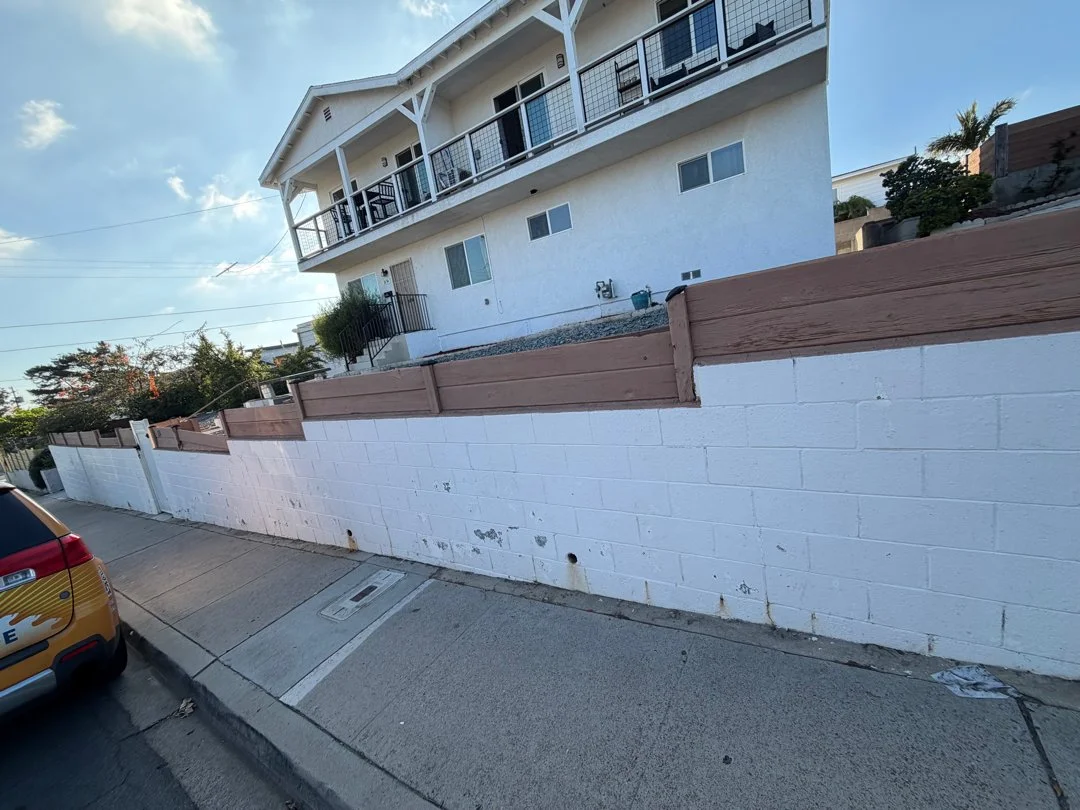
the Work Behind the Look
At HUGE Home Pros, we recently completed a project where a client wanted to upgrade the look and durability of their property line fence — but the base was a painted concrete block wall. Here's how we did it properly:
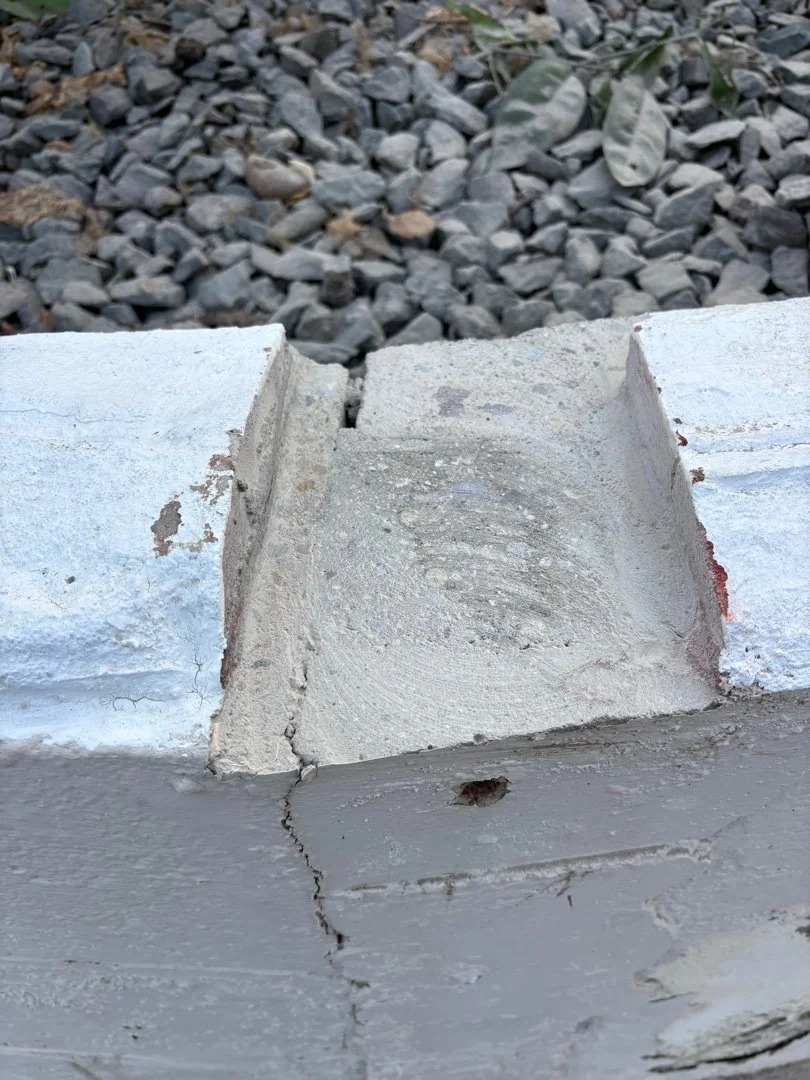
1. Carefully Cutting the Block Wall
We started by scoring and chiseling into the top of the block wall, creating pockets deep enough to receive the new metal fence posts. This requires precision to avoid damaging the wall's integrity, especially on aging masonry.
2. Installing the Posts
We used heavy-duty powder-coated steel posts, set deep into the freshly cut cavities. These were leveled and aligned across the entire run to ensure uniform height and strength — especially important on a long span like this one.
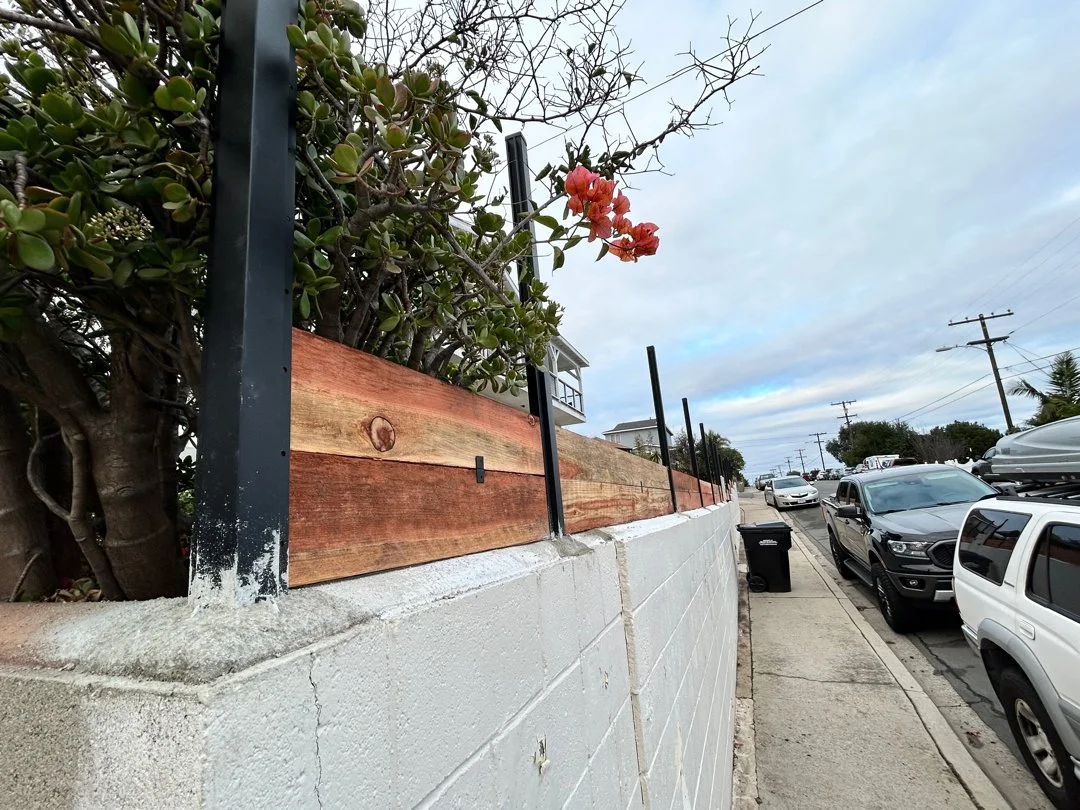
3. Reinforcing with Concrete
Once the posts were in place, we backfilled the cutout sections with high-strength concrete, securing each post firmly inside the block wall. This method provides long-term durability and keeps the posts from wiggling or shifting over time.
4. Mounting the New Fence
The posts were then used to support a beautiful new horizontal redwood fence, bringing both privacy and curb appeal to the property — without compromising the block wall or the sidewalk-grade slope below.
It's Not Just Cosmetic
Doing this type of project the right way means planning ahead for drainage, wall condition, and lateral force resistance. Surface-mounting to a block wall without proper embedment almost always leads to premature failure — especially in high-wind or high-traffic areas.
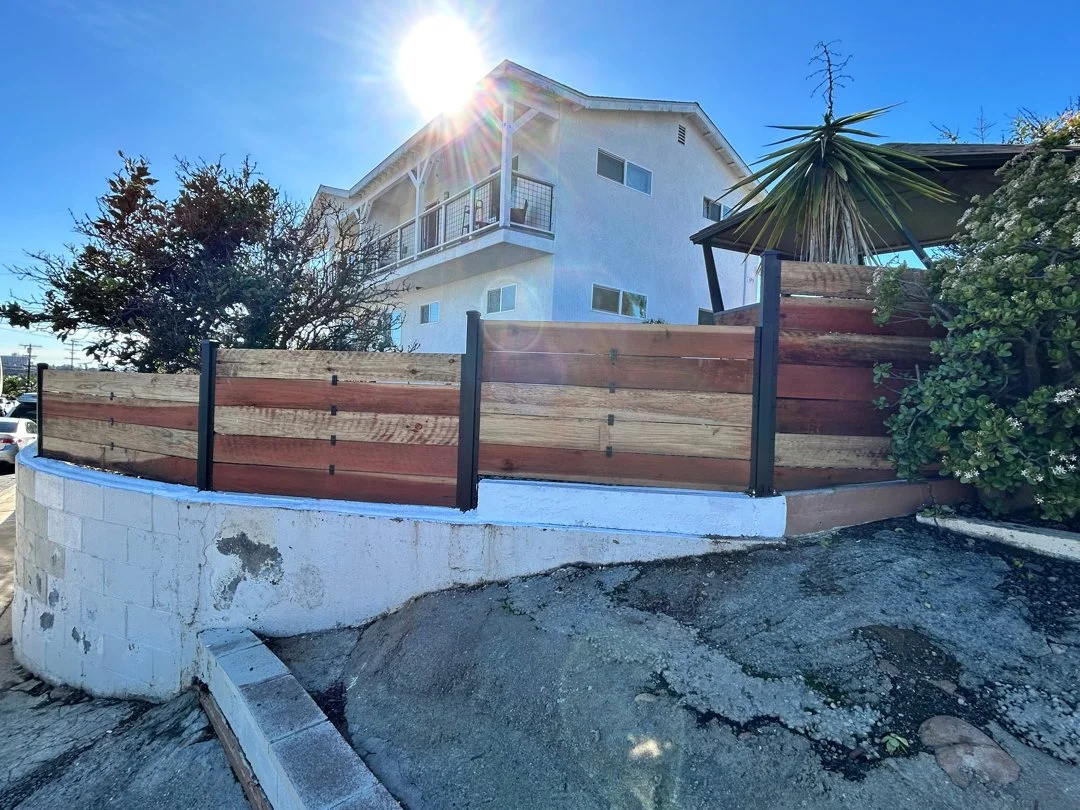
Final Takeaway
If your fence is sitting on a concrete wall, make sure your contractor is prepared to cut, reinforce, and finish the wall professionally. It’s more than just attaching boards — it’s structural work that affects both safety and longevity.