
Vinyl flooring in San Diego: The details that make it last
Vinyl flooring has become a popular choice for busy homes because it is durable, comfortable underfoot, and available in styles that closely resemble wood or stone. But while the finished surface may look simple, the quality of the installation depends heavily on what happens before the first plank goes down.
The floor underneath matters most
Vinyl planks need a clean, solid, and level surface. Small dips, raised seams, leftover adhesive, or damaged subflooring can prevent the planks from sitting correctly. Over time, these imperfections may lead to movement, uneven joints, clicking sounds, or visible wear.
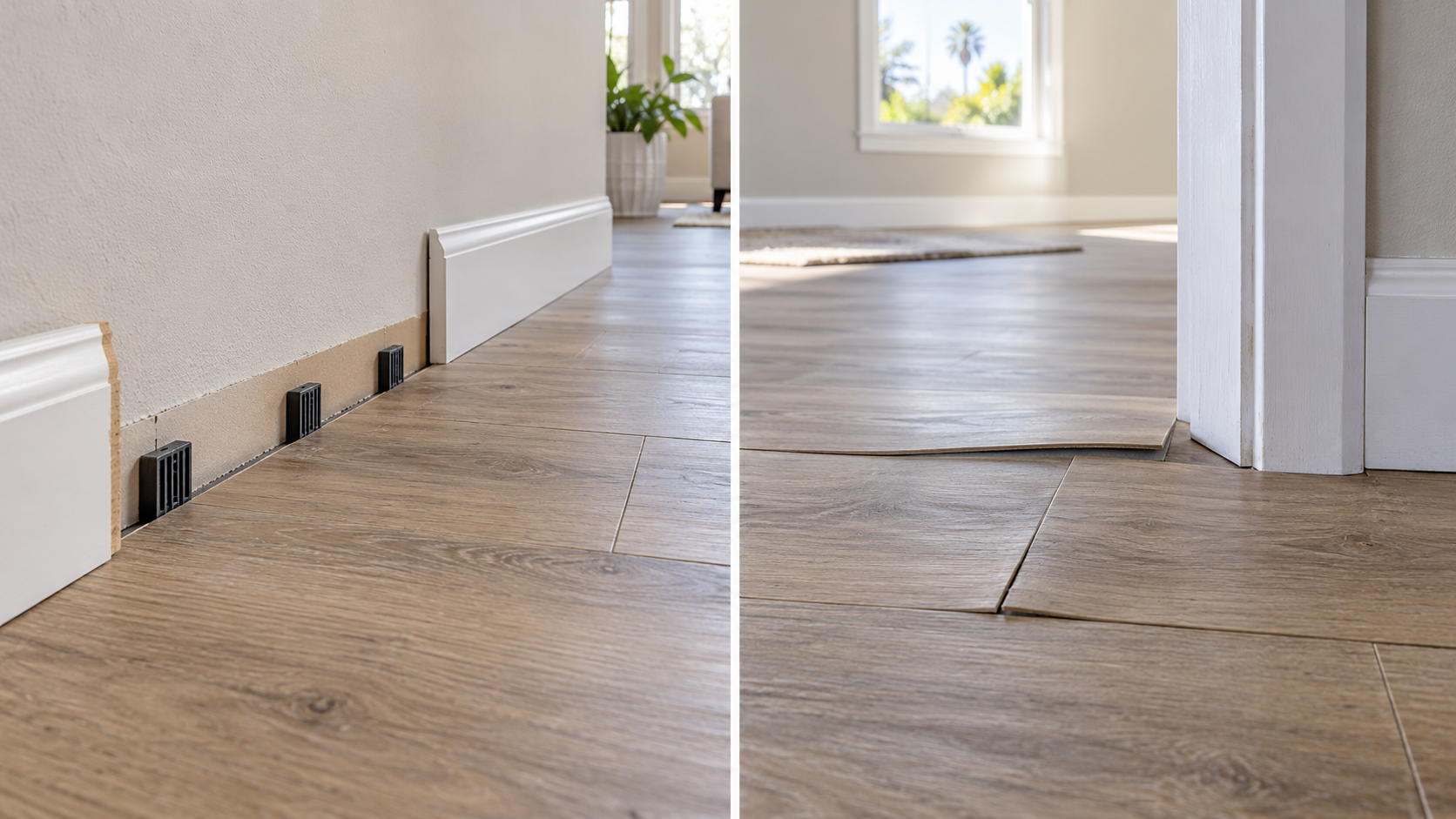
Floor preparation is not always the most noticeable part of an installation, but it is often the difference between a floor that feels solid and one that starts showing problems.
“Waterproof” does not solve every moisture issue
Many vinyl flooring products are marketed as waterproof. That generally means the material itself will not absorb water the way hardwood or laminate can. It does not mean moisture beneath the flooring can be ignored.
Moisture coming through a concrete slab, an unresolved plumbing leak, or dampness trapped under the planks can still affect the subfloor, adhesives, baseboards, and indoor air quality. If there are signs of staining, musty odors, soft areas, or previous water damage, the underlying cause should be investigated before new flooring is installed.
Expansion space is a small detail with a big impact
Floating vinyl floors are designed to move slightly as indoor conditions change. That is why installers leave a narrow expansion space around walls, cabinets, door jambs, and other fixed objects.
If the floor is installed too tightly, the planks may push against surrounding surfaces and begin to lift or separate. The gap is later covered by baseboards or trim, so it should not be visible when the job is finished.
Transitions should feel intentional
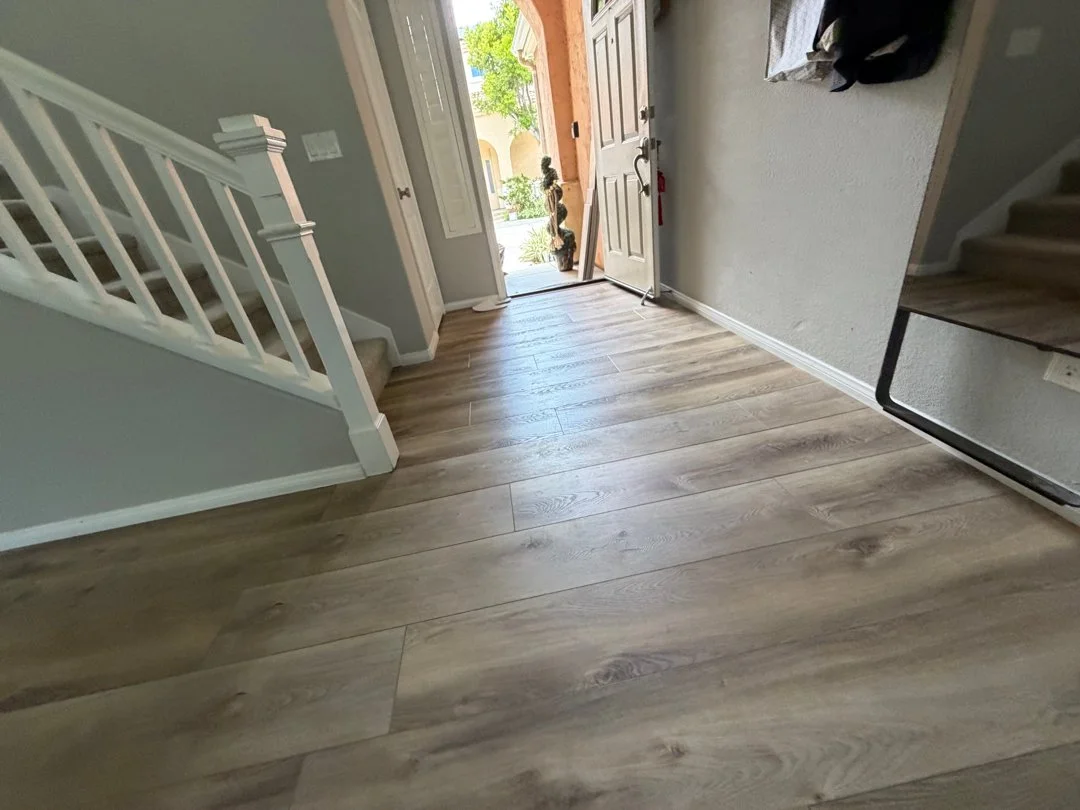
Doorways, stairs, cabinets, and changes between flooring materials require careful planning. Poorly placed cuts or bulky transition strips can make a new floor look unfinished, even when the planks themselves are installed correctly.
A thoughtful layout also helps prevent thin pieces along walls and keeps plank patterns from looking repetitive. These details may seem minor during installation, but they have a noticeable effect on the completed room.
The best installation supports the entire space
New vinyl flooring often involves more than placing planks. Baseboards may need to be removed or replaced, doors may require adjustment, and appliances or plumbing fixtures may need special attention. Planning for those details helps the project move smoothly and gives the room a cleaner, more complete appearance.
At Huge Home Pros, we look at both the visible finish and the conditions underneath it. If you are considering vinyl flooring for your San Diego home, we are happy to help you evaluate the space, understand your options, and plan an installation built to hold up.