
Sealed vs. unsealed grout (and why it matters)
Grout is one of those details most homeowners don’t think about—until it starts looking stained, cracked, or just plain old. And by that point, the issue usually goes deeper than appearance.
The difference often comes down to one simple step: sealing.
Looks fine… until it doesn’t
Fresh grout has a clean, uniform look that ties your tile together. But grout is naturally porous, which means it absorbs moisture, dirt, soap residue, and even bacteria over time.
Sealing doesn’t make grout bulletproof, but it creates a protective barrier that slows all of that down significantly.
Where this starts to go wrong
A lot of people assume tile itself is the protective surface—and it is. But the grout lines between those tiles are the weak point.
When grout isn’t sealed:
Moisture can seep in below the surface
Stains settle in and become difficult (or impossible) to fully clean
Mildew and discoloration show up faster in wet areas
Over time, this can lead to grout breaking down, loosening, or even contributing to underlying water issues—especially in showers.
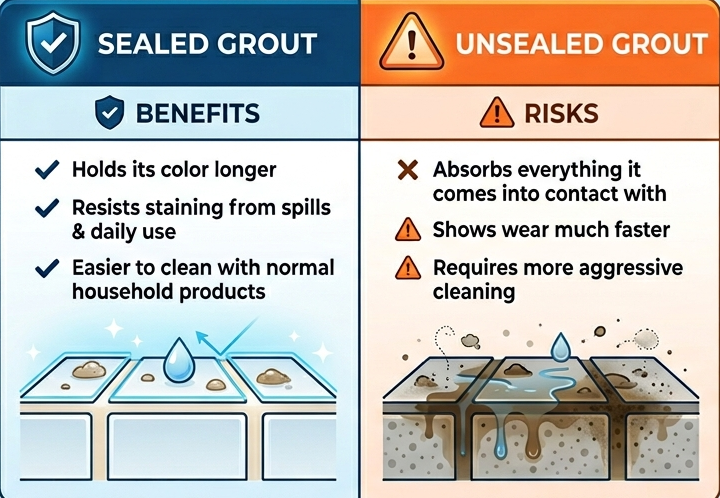
Sealed grout vs. unsealed grout
The difference isn’t just visual—it’s about longevity and maintenance.
Most people miss this step
Sealing grout isn’t always done automatically. In some cases, it’s skipped, rushed, or not reapplied when it should be.
Even properly sealed grout doesn’t stay protected forever. Depending on the area and usage, it may need resealing every couple of years to maintain that barrier.
It’s a small step, but it makes a noticeable difference in how your tile holds up over time.
Small detail, big impact
If your grout is already stained or breaking down, sealing alone won’t fix it—you may need cleaning, repairs, or partial regrouting first.
But if your tile is still in good shape, sealing is one of the simplest ways to protect that investment and keep everything looking clean longer.
If you’re not sure what condition your grout is in, or whether it’s been sealed properly, we’re always happy to take a look and give you a straightforward answer.