
The hidden support your walls might be missing
Most people don’t think about what’s behind the wall—until something starts to feel loose.
A towel bar that wiggles. A cabinet that never quite feels solid. A floating shelf that slowly pulls away over time. These aren’t always product issues… they’re often framing issues. And more specifically, a lack of proper blocking.
Looks fine… until you actually use it
On the surface, everything can look perfectly installed. Clean tile, straight lines, solid finishes. But if there’s nothing substantial behind the drywall to anchor into, those finishes don’t have much support.
Drywall alone isn’t designed to hold weight. Anchors can help in some cases, but they’re not a long-term solution for anything that gets frequent use or carries real load.
That’s where blocking comes in.
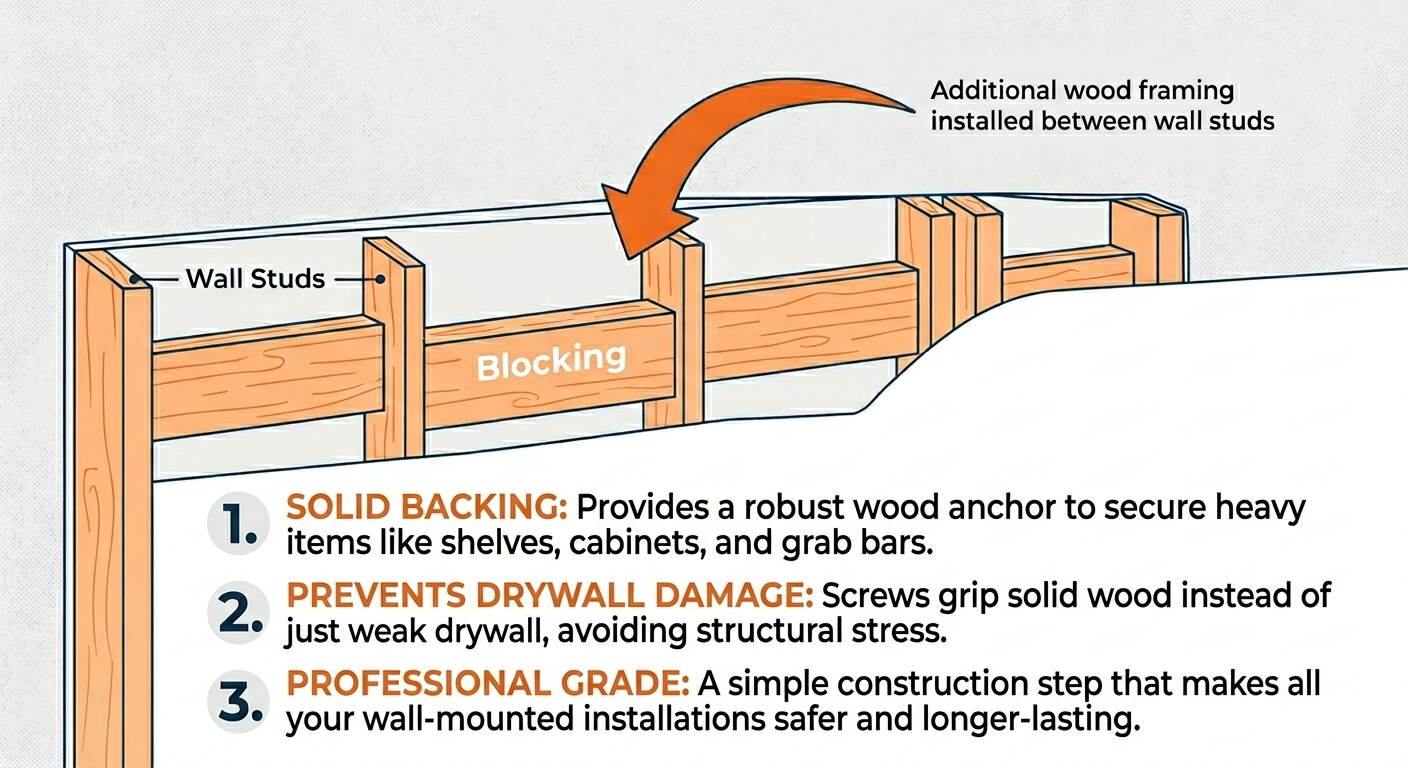
So what is blocking, exactly?
Blocking is additional wood framing installed between wall studs. It creates a solid, continuous backing so things can be securely fastened—not just to drywall, but to actual structure.
It’s simple, but it makes a big difference.
We typically install blocking anywhere we know something will be mounted, like:
Towel bars and toilet paper holders
Shower doors and glass panels
Floating vanities or shelves
Wall-mounted cabinets
Grab bars (even if you don’t need them now)
Small detail, big impact
Adding blocking is one of those things that’s easy to do during a remodel—and much harder to fix later.
Once tile, drywall, and finishes are in place, going back to add support means opening everything up again. That turns a simple improvement into a much bigger repair.
When it’s planned ahead of time, though, it’s quick, inexpensive, and completely hidden.
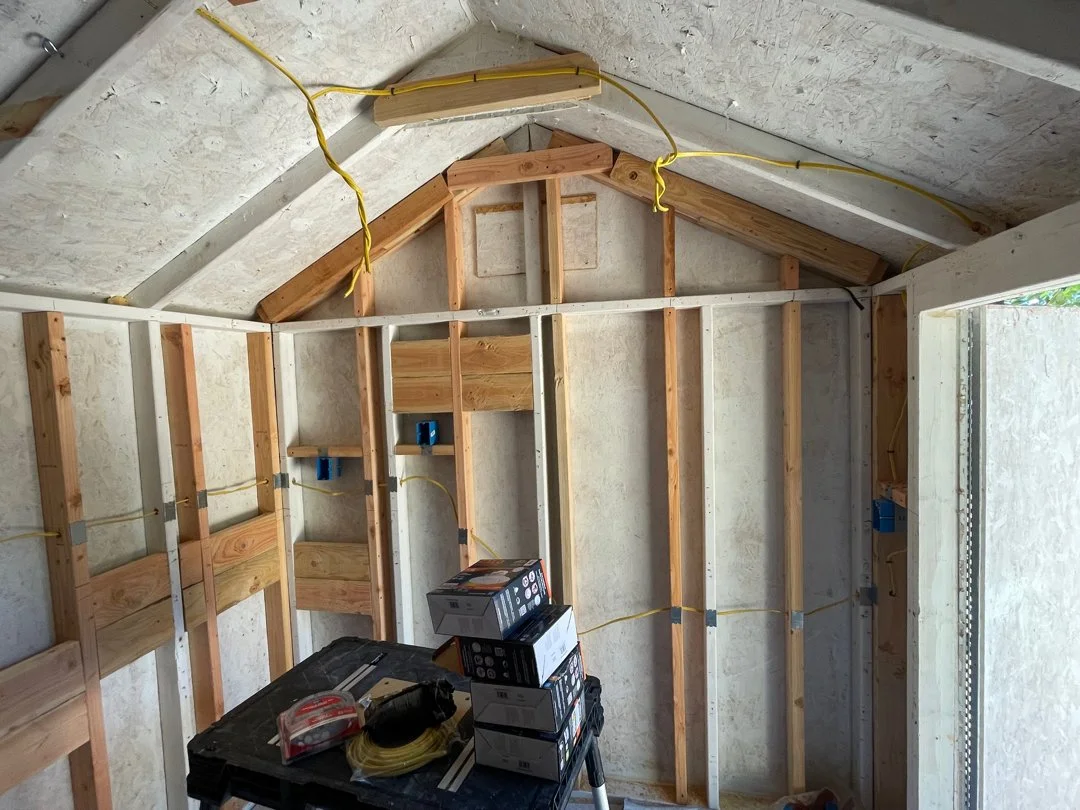
Where this starts to go wrong
A common issue we see is when layouts change mid-project, but the framing doesn’t get updated to match.
For example, a homeowner decides to shift a vanity or add a heavier mirror—but the wall behind it was never prepped to support that weight. Installers then rely on anchors or try to “make it work,” which usually leads to problems down the line.
Thinking a few steps ahead
Good remodel work isn’t just about how things look when they’re finished—it’s about how they hold up after months and years of use.
Adding extra blocking is part of that mindset. It’s planning for real life: daily use, shifting loads, and the little stresses that add up over time.
It also gives you flexibility. Even if you’re not installing something right away, having that support in place means you can add it later without opening walls.
A better foundation behind the finish
At Huge Home Pros, we treat these behind-the-scenes details as part of the finished product. Because when something feels solid, stays aligned, and holds up over time—that’s what people actually notice.
If you’re planning a remodel or dealing with fixtures that never quite feel secure, we’re happy to take a look and walk you through the right fix.